
Introduction to Trade Asset Management in SAP
A Trade Asset is an equipment made re-operational in the trade to generate demand for the goods. Trade Assets facilitate the selling of finished goods, in addition to preparing it for utilization. They are sold, rented, leased or given to customers on loan. Trade asset is an expensive proposition for a company due to a […]
Read More
How to track changes in SAP configuration objects
There are hundreds and thousands of different objects in SAP. I have written recently about how you can track changes in SAP objects like GL accounts, Cost Centres and so on. You may also be interested in reading about tracking changes in bespoke SAP objects. Unfortunately, not all these objects create change documents to track amendments. […]
Read More
How to track changes in SAP objects
There are hundreds, if not thousands, of different objects in SAP. To take Finance alone, we can create, maintain and process GL accounts, financial documents, cost centres, profit centres, fixed assets and so forth. But the creation of the object is not the only step in its lifecycle. It can also be changed and, rarely, […]
Read MoreDo not lose yourself in different SAP systems
I’m sure this won’t be fresh news to you if I tell you that the landscape of systems on a SAP project usually consists of several systems. The recommended landscape includes three: Development, Test, and Production. However, it is not a rare case for a particular company to have additional systems, for example Pre-production or […]
Read More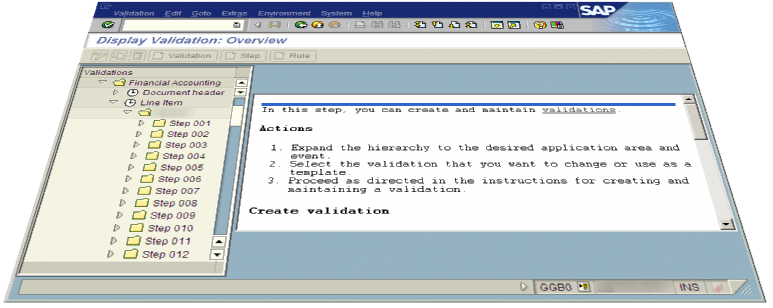
How you can lower down your support costs for SAP validations and substitutions. And ease your own life.
Substitutions and validations are an inevitable part of a SAP project. You always need to chec k that the document is entered correctly, or replace values in certain fields. SAP allows you to write subs and vals in an easy-to-use interface similar to the constructor. A few mouse clicks, a few keystrokes and you’re sorted. […]
Read MoreFollow Us!


Dmitry Kaglik
June 24, 2013
Guest Post, SAP
2 Comments